Pages

Wednesday, November 23, 2016

EU Targets Bitcoin, Anonymous Currency In Fight Against Terrorist Financing


European leaders are planning to crack down on the use of bitcoin, prepaid credit cards and other methods of anonymous payment in response to the Paris attacks last week, Reuters reported Thursday. It's part of a crisis plan that aims to dismantle suspected terrorist financing networks after the massacre, claimed by the Islamic State group, killed 129 people and wounded hundreds.

Interior and justice ministers from throughout the European Union are scheduled to meet in Brussels Friday, where they will encourage the leaders to “strengthen controls of nonbanking payment methods such as electronic/anonymous payments and virtual currencies and transfers of gold, precious metals, by prepaid credit cards,” according to a draft obtained by Reuters.

Bitcoin is the most popular form of digital cryptocurrency, with users able to transact in relative anonymity with fees lower than those generally imposed by credit card processors. It's frequently used as part of criminal dealings, though it's not clear to what extent ISIS is doing so. The terrorist group also survives thanks to criminal activity, oil sales and donations from officials and wealthy individuals in Arab countries allied with the U.S.

Russian President Vladimir Putin also set up a commission to fight terrorist financing Wednesday. Putin issued a notice to Russia's central bank, prosecutor's office and regional authorities instructing them to immediately report any suspicious financial activity that could be linked to terrorism. Among those encouraged by Putin's stance was President Barack Obama, who, after years of frosty relations over a number of issues, deemed the Russian leader a “constructive partner” in the global fight against ISIS.

Wednesday, November 16, 2016

Memphis Residents Now Have Their First Bitcoin ATM


The city of Memphis will now have a Bitcoin ATM as the firm Coinsource installs three new machines in the state of Tennessee. The company is the largest Bitcoin ATM provider in the U.S. and has averaged over one installation per week in 2016.


Memphis Bitcoin ATM One of Three in Tennessee

logo2-id-fa176b8a-9aee-44f6-9ad5-4672e628e52e-300x300Memphis, in Tennessee's southwest, will get its first Bitcoin automated teller machine. Additionally, the company Coinsource installed two Bitcoin ATMs in the city of Nashville. Coinsource has established 60 Genesis Coin brand cryptocurrency ATM across the U.S. since its inception.


"The demand for bitcoin ATMs has never been higher than it is today. The most rewarding part of our job is to answer the call when requests come in for new locations, so it is exciting to make history in Tennessee," said Coinsource CEO and co-founder Sheffield Clark. "Our reach in the South is growing. So far, we have 60 machines across eight states, and look forward to gaining a foothold in even more new cities around the country."


Bitcoin ATMs in Tennessee via Coin ATM Radar

U.S.-Based Coinsource Will Soon Focus on International Expansion


Coinsource CEO and Co-Founder Sheffield Clark According to Coin ATM Radar, there are 482 installed Bitcoin ATMs throughout the United States. Coinsource, which Clark founded in February 2015, owns a large share of these devices. Bitcoin ATMs have provided people with easier access to cryptocurrency using cash. Additionally, with an automated teller machine that dispenses bitcoin all users need is a wallet to store the funds.


Coinsource says its mission is to make "buying and selling bitcoin as immediate and natural as withdrawing or depositing fiat from a traditional ATM." The company claims it has first-class customer support and some of the lowest transaction fees in the market.

Sunday, November 13, 2016

Will Bitcoin Have Its Moment in the Trump Era?


History tells us that no international monetary system lasts forever. And as Barry Eichengreen, the leading thinker in this arena, has repeatedly reminded us, those systems tend to collapse very quickly, whether it was the dominance of Rome's coins, the British pound's status as the common unit of international trade, or the various periods in which the world aligned around the gold standard.

The same will be true for the dollar's unofficial status as the international reserve currency. Its hegemony will at some point disappear and, when it does, the fall will be swift as the world scrambles for a new commercial anchor.

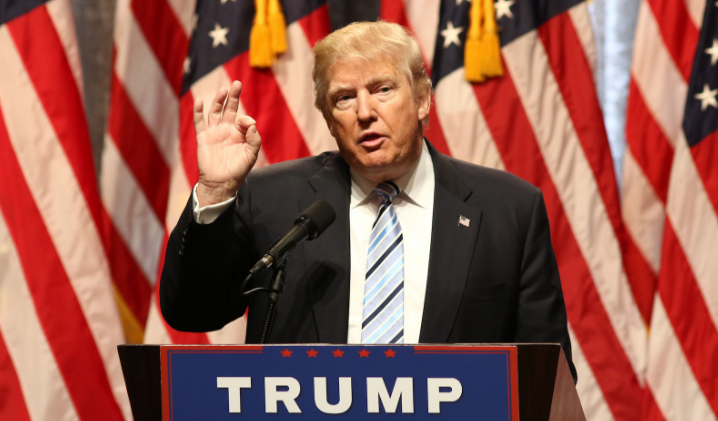
Below I will make the case that the trigger for this decline, whether it happens in the next four years or not, could well have been put in place last Tuesday. A Trump presidency could hold the right ingredients for a dollar collapse.
I will also argue that this time, when the dollar system collapses, it won't be replaced by another outdated fiat currency like the euro, yen or Chinese yuan. Neither will we go back to a precious metals standard, however much gold bugs hanker for it.
In the interim, we may anchor world trade to a transitional, multilateral combination of these paper and commodity currencies, but soon enough it will prove to be too unwieldy and out of touch with a changing global economy.

The fact is we now operate in a digital economy in which economic activity is increasingly decentralized, with transactions happening peer-to-peer and, when the Internet of Things is in place, machine-to-machine. That online, decentralized economic architecture will require a digital, decentralized system of monetary exchange that bypasses the inefficient financial intermediaries of a broken banking system.

The solution might not be bitcoin per se, but the distributed, network-run system of value transfer that it represents will, I believe, provide the template for the future model. It's one possible explanation for why the digital currency got a bump on Tuesday evening through Wednesday.

Change is coming
Why might Trump set this chain of events in play? To be sure, we don't know what changes the next president will introduce, but he has definitely stoked uncertainty around the direction of US policy. And uncertainty, the enemy of efficient markets, can often have a self-fulfilling effect.
That's an unsatisfying answer, however. So let's also break down some of the ideas that Trump has floated and how they might change the international perception of America's commitment to the dollar-based international system:

Rights determined by ethnic background
Trump suggests we should discriminate against external foreigners (Muslim visitors to the US), domestic non-citizens (undocumented Hispanic immigrants) and domestic citizens (judges deemed unfit to serve for being of Mexican descent.) This is not just a moral issue; it goes to the heart of whether the law is impartially upheld in the US.


Sunday, November 6, 2016

Blockchain: Why the 'Big Guys' Can’t Win


Matthew Spoke is CEO and founder of enterprise blockchain startup Nuco. He is a bitcoin and ethereum enthusiast, who has previously worked with Deloitte with the aim of advancing the use of smart distributed protocols.
In this opinion piece, Spoke looks at moves by tech industry incumbents to capture the emerging blockchain market, and offers a warning for the eventuality that they succeed. 

Chess pieces
There's a seemingly obvious marriage happening right now between two incredibly important Internet technologies, one that promised to make web businesses more scalable and organizations more efficient (which has happened to a large extent), as well as holding decentralization and disintermediation as the ultimate objective (on which the jury is still out).
Earlier this year, I wrote a piece about the "Race Towards Irrelevance" that seemed to be taking place among traditional organizations whose markets and business models stand to lose from the adoption of decentralized systems. Primarily, I was referring to some intermediary companies in the financial services industry who will struggle to redefine their value propositions as blockchains become more commonplace.

What I failed to include in my prior ramblings was that it's not only traditional industries and businesses who face this risk. Similar to the attention and investment that has poured into the "blockchain industry" from financial services firms, there are a number of global scale technology vendors positioning themselves to dominate this market – or, to a skeptic, centralize it.

I'm referring to "the cloud" and "the blockchain", two terms which should more accurately be used in the plural sense.

Decentralization is key
I'm not suggesting that cloud computing is not well suited to underlie blockchain infrastructures.

On the contrary, in many cases, there's an obvious match that allows for efficient scalability, robust node security and light weight onboarding, among other benefits. But (and this is a big but) these benefits quickly become irrelevant if we forget about the need for appropriate decentralization. Naturally, it's no surprise that the same companies who, to a large extent, brought us the mainframe and the PC, want a piece of the blockchain action. It's also no surprise that these same companies are already in the process of capturing large parts of the emerging blockchain market.

As the old adage goes: "nobody ever got fired for buying [insert big tech company here]."

In general, I think the entrance of big tech companies into this domain has had a positive impact. It has helped bring much needed credibility and reaffirm the importance of these new technologies. That said, as markets consider their adoption, we should encourage an objective analysis as to the appropriate implementation of this technology so as to achieve its intended outcome.
Although there are many reasons to trust the competency of  prominent technology vendors and the integrity of their systems, which have been proven for decades in other domains, let's keep in mind that the intended purpose of this paradigm shift is to eliminate the need for trust. Objectively, this means that a blockchain cannot be dependent on a single vendor's infrastructure or security.