Pages

Sunday, March 6, 2022

Papa John’s Use The Tezos Blockchain To Give Away Free NFT Bags


Papa John's NFT Bag Giveaway
Papa John's is using the Tezos blockchain to give away free NFT bags designed by two talented NFT designers; Tom Hoff and Ash Sketch. One lucky winner given the chance to with a real-life version. The NFTs can be claimed here.

There are nine NFT bags from 19,840 to choose from and claiming a bag enters the owner into a draw to win a collectible real-life Papa John's bag, with the winner being chosen on the 14th April 2022. This will be the 'Papa 1984' yellow bag, by Ash Sketch.

The bag is worth £250 and users are able to mint one NFT bag per wallet in order to enter the draw.

Papa John's is the fourth-largest pizza delivery restaurant chain in the United States, operating over 5000 restaurant locations worldwide. The pizza bag giveaway will represent the company's first foray into the NFT market and for this they chose to utilize the environmentally friendly Tezos blockchain in order to distribute the offering.
Papa John's stated:

Most Proof of Work blockchains are very inefficient and wasteful by design. They can use millions of times more energy than modern Proof of Stake blockchains like Tezos. By comparison, creating and trading NFTs on Tezos takes around the same amount of energy as sending an email or a social media post.

Last year big rival Pizza Hut entered the NFT market with their pizza art NFT offering.

People will be able to buy the real-life versions of these bags in an exclusive drop of five real Papa 1984, Papa Cheese Melt and Papa Tag bags which will go on sale via Depop, the fashion marketplace, on 7 March 2022. 

Tuesday, March 1, 2022

Tezos Records Highest Number Of Contract Calls In January With Several Dapps Set To Launch


A Smart Contract Call Record
Contract calls are interactions with smart contracts in the form of transactions. This is an important metric to see growth in the adoption rate of mainnet smart contracts. Since July 2020, the amount of contract calls has increased to 1,209% of the July total.

Every month we've seen a new record in the number of contract calls (except for November, which had a 10% drop).

January saw a 22% increase compared to December. At 22% it sounds ok, but if put this growth into perspective, we see that that 22% is 2.2 times the total amount of contract calls in July last year. We're witnessing exponential growth.

If we're looking at developer activity, we also continue to see growth in activity. In December, we saw an average of 700 daily new deployments on testnets. But in January, we see an average of 930 daily new deployments.

February is set to bring a lot of new launches and milestones.

Edo
The latest protocol upgrade will go live on mainnet in the second week of February. This is a feature-packed upgrade that includes privacy features.

This means that developers can easily integrate privacy into their smart contracts, which will enable them to provide private transactions and develop "privacy-conscious" applications.

Edo also introduces Tickets. Tickets is a convenient mechanism for smart contracts to grant portable permissions to other smart contracts or to issue tokens.

Tickets will be improving challenges like concurrency, which is a general issue developers face, especially in decentralized smart contract platforms.

Tickets also enable a more efficient way of interacting between contracts. It will enable self-custody of first-class coins/token permissions and improve the developer experience.

These are just a few of the advantages Tickets will bring and you can read more about tickets here.

Kalamint
Kalamint is a platform that can be used to create, sell and collect NFT's. Besides the advantage of low Tezos fees over high fees on Ethereum-based NFT platforms, Kalamint will have a unique governance design that includes a Guild.

We'll do an extensive article on Kalamint before they launch the platform on the 18th of February.

TEZEX
TEZEX is a cross-chain gateway to Tezos. It will enable value to come from Ethereum to Tezos DeFi in a few clicks. After that, users can move away from the current fees on Ethereum, and experience a drop in costs that is on average 3,000 times cheaper on Tezos.

When TEZEX launches, another crucial instrument joins the Tezos DeFi landscape.

Quipuswap
This is the second Decentralized Exchange (DEX) that is built on Tezos. Chances are that it will launch in February. This does, however, depend on the progress of the external audit of Quipuswap.

Kolibri
Kolibri is an algorithmic stable coin, built on Tezos and backed by XTZ. A February launch of Kolibri could be a bit optimistic to expect, but a testnet was released in the beginning of January, so there has some significant progress.

1,000,000 accounts
In February, Tezos will quite likely reach the milestone of 1,000,000 funded accounts.

With currently 945,284 funded accounts, and  97,253 new funded accounts in the past 30 days, ~55,000 account are likely to get created this month and break the 1 millionth milestone.

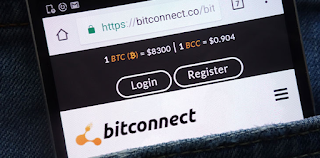
BitConnect founder indicted over $2.4B Ponzi scheme, faces 70 years in prison


A federal grand jury in San Diego has indicted the founder of one of the largest scams in the digital currency space, charging him with wire fraud, conspiracy to commit commodity price manipulation, and international money laundering. Satish Kumbhani, the founder of digital asset mega scam BitConnect, faces up to 70 years behind bars if convicted of all the charges.

The San Diego court claimed in its indictment that Kumbhani misled investors about BitConnect's Lending Program. Under this program, the 36-year-old and his cronies allegedly told investors that they could generate guaranteed returns by using their investment funds to trade on the volatility of the digital asset markets, authorities said. They touted the 'BitConnect Trading Bot' and its proprietary 'Volatility Software' as being able to generate guaranteed returns.

The project collapsed in early 2018, and it was outed as a massive Ponzi scheme in which Kumbhani and his co-conspirators used later investors' money to pay off the early investors. They were able to raise $2.4 billion from investors before the project sank, according to investigators.

The indictment further alleges that after shutting down the Lending Program, Kumbhani directed his network of promoters to artificially and fraudulently manipulate and prop up the price of the BitConnect Coin (BCC), the project's native token. This gave the impression that the token was in high demand and increased its price.

To cover their tracks, the BitConnect leaders allegedly comingled and exchanged users' funds through their cluster of digital currency wallets, concealing the location and control of the funds.

Throughout the length of their operation, the BitConnect operators were aware but willfully ignored all the relevant regulations, authorities said. These include operating a money transmitting business through its exchange without registering with the Financial Crimes Enforcement Network (FinCEN), which violates the Bank Secrecy Act.

In his comments, Eric Smith, the Special Agent in Charge of FBI's Cleveland Field Office, warned digital asset scammers that the FBI would pursue criminals who turn to digital assets to conceal their schemes.

"Dressing up a tried and true fraud scheme with a new twist and basing it overseas will not deter the resolve and dedication of the FBI to meticulously investigate and bring such fraudsters to justice."

The IRS, the Justice Department's Criminal Division, and the Southern District of California's Attorney's office all shot a warning to digital asset scammers as well, reminding them that the industry isn't beyond the scope of the law.

The indictment charges Kumbhani with wire fraud, conspiracy to commit wire fraud, conspiracy to commit commodity price manipulation, conspiracy to commit international money laundering, and operating an unlicensed money transmitting business. Kumbhani, from Hemal in India, could spend up to 70 years behind bars if convicted of all the charges.

As CoinGeek recently reported, the 11th Circuit Court of Appeals recently sided with victims of BitConnect, giving them the green light to pursue a class-action lawsuit against the project's promoters. The Southern District of Florida had tossed the lawsuit after the promoters had argued that the Securities Act of 1933 doesn't encompass solicitation conducted through online mass media means.

In its ruling, the appellate court pointed out that the Act doesn't impose a limitation on the means of solicitation, nor does any precedent ever set in the court.

"Because the Securities Act provides no free pass for online solicitations, we reverse the district court's dismissal of the section 12 claim," Judge Britt Grant ruled.

Follow CoinGeek's Crypto Crime Cartel series, which delves into the stream of groups—a from BitMEX to Binance, Bitcoin.com, Blockstream, ShapeShift, Coinbase, Ripple, Ethereum,
FTX and Tether—who have co-opted the digital asset revolution and turned the industry into a minefield for naïve (and even experienced) players in the market.